Wednesday, 14 December 2016

PRESENTATION


In our presentation today we had to discuss the film ideas and back story and the reasons of creating this documentary following after our course and tutor review in the cinema room G14.

Below is a copy of the presentation. In the presentation we showed what our initial ideas were based on and where we had taken inspiration from. We received some positive feedback from the other teams and tutors alongside constructive feedback.


Here we explored the subject of Tattoos and brainstormed how we would approach it and turn it into an informative documentary.


In this slide are documentary's that had already explore the subject we were interested in and so we decided to take inspiration from them, both in content, technique and visual presentation.


We then did research into the details around our subject that would lead to creating a story that would cover the theme of Community. By doing this research we were able to find out what the most interesting questions would be for us to answer in the Documentary. The research we did was backed up by reliable sources and included statistics compiled from research done by a third party.


After we carried out the research the next step was to find out if we could get enough participants in our local area, to take part in the Documentary. Our producer, Nina, decided to post on Facebook reaching out to people with Tattoos in the local area. This resulted in 30 responses from people that were interested in taking part. This confirmed that we were on the right track.


This slide shows our original idea for building a structure that we were going to use for our editing, however after getting feedback from our tutor, we decided to redo the structure and develop more personal stories from the participants. I felt that we adapted to the feedback received rather well, and that it helped us to create a successful documentary.


The specific parts of the production pack that helped us the must when editing were the Transcripts, Shot List and Story Board. These documents helped us decided what shots we wanted in the finished film and made editing much more efficient. The process emphasised to me the importance of the Production Pack as a whole.


Final Documentary: BENEATH THE SKIN


Beneath the Skin

After exploring other ideas we decided to settle on documenting the community that inspires the reasoning behind getting a Tattoo. Here is the completed production and my personal feedback on my performance throughout the production process.


Beneath the Skin 2016

The film is a Participatory Documentary, when considering Bill Nichols six modes of documentary. This was the style that we chose to use because it allowed us to explore the theme of community directly through the members participation within it and by allowing them to tell to the audience in their own way and from their own experiences. We found that using the Participatory format, it also allowed for a natural sense of humour to come across from the cast which is likely to connect well with the audience.


Self Evaluation 

My assigned role in this production was Camera and Sound Operator. Leading up to and during in the production proccess we had to face many obstacles, both within the team and in the production environment. Overall I felt that we developed as a team, overcoming these obstacles and were able to produce a documentary that we are all proud of. Additional, I felt that I had learned how to delegate tasks to other team mates when my skills weren't adequate and to make sure that tasks were completed on time, and also how to complete tasks as an individual, learning key skills throughout the process and ensuring that deadlines were met.

One skill that has developed significantly would be how to deal with conflict in a team. I came to realise that it was important that disagreements were resolved quickly to avoid any delay in production. And also to consider that I might not always have the solution, and that it can be important to look elsewhere to find such a solution and always considering my team mates opinions.

I believe that it was vital we worked as a strong collective workforce, and that our time should've been divided equally within our assigned roles in order to avoid conflict or delays. However we lost two members of the production team due to unforeseeable circumstances, which made it much more difficult to allocate tasks and complete them efficiently and on time. I found that the lines between the roles had blurred and the challenge of doing tasks originally intended for a team of five with just three people created a large obstacle. Regardless, this did force me as a individual to take on tasks outside of my role , that I may have otherwise had little involvement with - such as Risk Assessments and creating call sheets. I had in fact handled tasks carried out by and Editor, and Cinematographer.

A problem we repeatedly faced was bad communication, and sometimes a lack of it. We had decided to handle all communication through Facebook Messenger, which I now realise probably wasn't the best platform to make production arrangements on. For instance, meetings were occasionally not circulated through the team which would mean that a member would be left out, causing conflict and miscommunication of progress and outstanding tasks. In the future I will probably find a more efficient method to communicate, such as sending meeting confirmations via email and finalising all decisions throughout the entire team in person before moving on.

Editing was another of the issues that we faced on the technical side of the production. We had problems with the software itself throughout the production, which led to the loss of unsaved data due to hardware malfunctions causing devices to overload and freeze. In the future I would use a Cloud Storage service, and have all data backed up at all times rather than my physical hard drive. Additionally we faced a problem where the sound had failed to encode onto the file, which lead to a delay in editing - however these issues was eventually resolved.

Overal I feel that the entire process was a positive learning experience, and that I was able to find a solution for most of the obstacles that I faced. Often anything that I did not know how to do I was able to either research the solution or delegator to another team member, which demonstrated successful team work. If I was to chose one thing that I think needs improvement, that would be my personal organisation and communication - I need to work on keeping to a schedule, and communicating more confidently to other members of the team.


Thursday, 24 November 2016

PORTRAIT ASSESSMENT


Steven Meisel 


Steven Meisel is an experienced and talented vogue photographer who has performed counties projects for global brands such as Tom Ford, Calvin Klein, Dolce and Gabbana, Prada,  Louis Vuitton and many more.

I felt that Meisel was a good photographer to continue looking at for the continuous theme of identity. Following my story of who we want to be. The very idea of a model can speak to many as desirable and perfection in society. As well as an acute sense to the latest fashion. My idea was to approach with a similar response elaborating my subjects figure in order to fit their desires and innermost needs. I want to do this because it ties in nicely with my story and it plays upon the wants, painting a mental picture of the individual and an insight to their thought process.

STEVEN MIESEL, JULY 2000.                                                                                                                            STEVEN MEISEL,JULY 2014.


VOGUE ITALIA, BY STEVEN MEISEL JAN 2016. 
AGYNESS DEYN VOGUE ITALIA BY STEVEN MEISEL, NOV 2006.


In this photoshoot I wanted to explore the styles of Steven Meisel  and incorporate it into my own portraits. I identified that Meisel chooses subjects with prominent facial features, and that he is best known to often choose professional models who would considered desirable in looks by mainstream society. I also observed that he rarely shows the subject plainly, instead Meisel uses story telling techniques within his photographs. I was specifically inspired by his portfolio 'Makeover madness.' Which shows the transformation of each subject through the makeover process.


MY RESPONSE 


I experimented with varying the amount and direction of the light that would fall upon my subject, using a light-box and artificial lighting. Shot using my macro lens, 24mm prime lens and 18-55mm IS lens, which achieved a range of close ups and wide angles. 


Overall this entire photoshoot was about 300 images and consisted of three different parts. Such a large photoshoot gave me time and creativity to come up with different features that could be applied to the subject. I was fond of how eventually my housemate, Dan. Began to absorb this role I presented immersing himself creating a visually mental understanding of Dan's nature. 


MY FINAL CHOICE 


I chose these images as part of my final selection because I felt that they produced the idea of who we want to be really well. The subject wore a fur blanket and much like a crown is often associated with wealth. This object highlights my subjects desire to be wealthy and successful. The face paint was used to detach my subject from his original self, obscuring the face that he wears in his day to day life ,thus creating an alter ego. Similar facepaint designs and colours were used by ancient tribes in America to show strength and power - used on my subject to show his wanting to be respected by his peers and society.

I intended to follow a story throughout my project that would show my representation of ideas about 'who we are, what we do, who we want to be.' I am confident that this has been presented well and I achieved what I mostly intended. Through my research I have learnt that identity through portraits can have many forms, different ways of telling the story.Yet I believe that portraits are a form of identification.The frame may stay the same, but the subject of interest will change. This allows us to construct a photograph that has reflective meaning onto the observer. Observers are able to interpret  the still actions of the subject within the frame and analyse the characteristics in these actions to build an emotional reaction to the image. Theses characteristics can be facial features,as in common with traditional portraiture or through body language.

 My ability with macro lenses to explore unusual compositions and angles has enhanced my knowledge of photography. I've also learnt how to manipulate artificial and natural light to improve an image to greater effect.

Overall I am happy with the work I've produced, but their are certain areas of improvement that could be made. I didn't explore much traditional styles of portraits which I would like to do in the future. additionally I could've shot a wider range of subjects, specifically people I didn't know so well as apposed to my little sister or my housemate. This could've given me the opportunity to explore more observational portraits. I do believe my skills in creating an impressive professional image has improved over the course of these nine weeks. Although I will confess it was stressful not being able to use editing tools in post production. I feel a sense of achievement in producing a raw image with only lighting, composition, exposure and much more at my disposal for which I am pleased.

However I cannot resist the urge to present my selected final few in a polished form of post production. However !! They are in no way or form part of my final piece but only a contributor! 


BELOW ARE ALSO EDITED VERSIONS OF MY THREE PART PHOTOSHOOT THAT I CHOSE TO LEAVE ASIDE. HOWEVER IN DEDICATION TO THEM I ADDED A SELECT FEW IN EDITED FORM. ENJOY.


BIBLIOGRAPHY 


STEVEN MEISEL JULY 2000 -

http://agonistica.com/wp-content/uploads/2012/12/53.jpeg

STEVEN MEISEL JULY 2014 - 

http://eclectix.com/wp-content/uploads/2014/07/steven-meisel-stylist-camilla-nickerson.jpeg

AGYNESS DEYN VOGUE ITALIA, NOV 2006 - 

https://pleasurephoto.wordpress.com/category/agyness-deyn/page/4/


VOGUE ITALIA BY STEVEN MEISEL, JAN 2016 -

https://uk.pinterest.com/pin/563161128385567285/


Thursday, 17 November 2016

DANCE RUSHES TEST PROJECT


As part of our second workshop into premier pro editing, we were tasked in recreating a dance video, using the rushes from a past students work in order to create our own edited version of the dance video. Although we got to use a vast array of tools to construct our videos, I was particularly annoyed  at the fact that I was having issues with downloading half of the clips in order to recreate my piece. This was because my hard drive wasn't compatible with the computer system I had access to, therefore I had to make do with what I had on the cloud. So without further ado, here is my edited dance video!


Dance Video Edits


Music by : Kai Engel - "Waking stars" from freemusicarchive.org// royalty free with artists permission.

Monday, 14 November 2016

TIM WALKER


TIM WALKER 

PORTRAITS 


Love Ghost, Photography by Tim Walker.


Mechanical Dolls, Vogue Italia, 2011. Photography by Tim Walker.


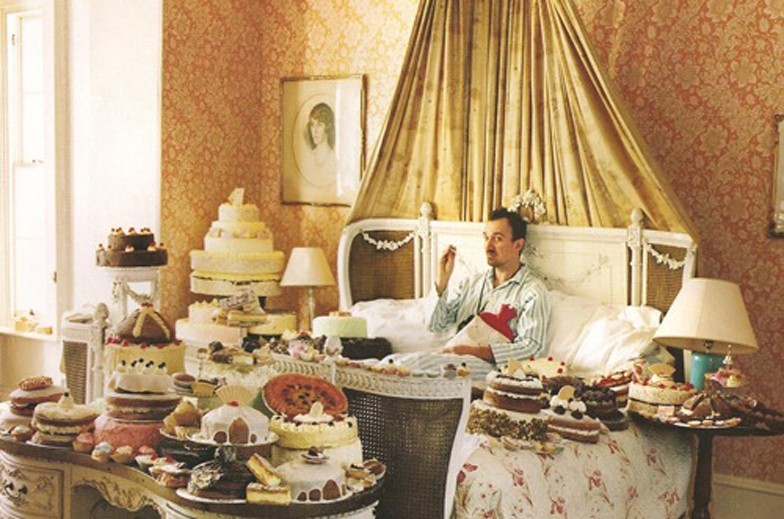
Self- portrait with eighty cakes, 2008. Photography by Tim Walker.


Tim Walker has bedazzled the fashion industry with his dramatically staged subjects. His extravagant styles and furor pieces has undoubtedly set his style and engaged audiences for decades. Although, his first major vogue exhibition was in 2008. Furthermore, Walker has begun to express his modus operandi in moving film. Walker's book 'Storytellers.', published by Thames and Hudson in 2012 is my area of concentrate for my portraits.


Story Teller published in 2012 by Thames & Hudson.


I intend to stage scenes, capturing the spirit of the moment, whist retaining that extravagant feel Tim Walker furnishes his photos with. I personally enjoy his images because they engage my mind and allow me to contemplate - in depth - the messages conveyed. What fiercely draws me to his portraits is the subject itself, such as the photograph below of Helena Bonham Carter. In particular, this photograph gives me a mental picture of lost hope and dreams unfulfilled.


Helena Bonham Carter, Photography by Tim Walker for vogue, 2010.

Furthermore, the image featuring Helena Bonham Carter is layered with objects that could possibly relate to the psyche of herself, and being encased in webs is presumably a measurement of time. There is more that can be said about this singular image, however its relation to my work coexists with my idea of who we are.

My response to Tim Walkers portraits was to create an elaborate scene. Through a few layout  and prop decisions I finally came to the conclusion of creating an Alice in Wonderland styled tea party,  using my little sister as the primary subject. I decorated the layout with objects from around my home. The idea behind this was to reflect the desires we have and implicate them into a mental picture that would create an image much like a dream to the individual.


The entire photoshoot took around two hours to complete.


The photoshoot produced over two hundred individual photographs. My favourite five were numbered down to just three, of which I chose to display here, simply because I felt that they are the most dramatic and I am personally very fond of. Once I had concluded down to my final three I used post editing software Adobe Light Room to give them an over opposed look and also heightened the colours using saturation techniques and strengthened the detail by raising the clarity.


Besides Tim Walkers affection for his estranged and exaggerated photography. His creativity extends into short films where he has directed, produced and occasionally written them. What intrigues me about his work with film is that he often uses a super 8 camera, which offers a more personal touch to the short films. Additionally I have found that mixing the old with the new can create a very indie or vintage feeling. A selection of Tim Walkers films have been collected below.

I highly recommend taking a look at his photographs or short films on his website to discover more about him !  


STRANGER THAN PARADISE - SHORT FILM


THE MECHANICAL MAN ON THE MOON -SHORT FILM  


THE MUSE - SHORT FILM 


BIBLIOGRAPHY 


Tim Walkers, Love ghosts-

http://www.timwalkerphotography.com/assets/photos/_compressed/TW_LoveGhost_R117F03-PANOc_web_1.jpg

Tim Walkers Mechanical Dolls-

https://s-media-cache-ak0.pinimg.com/originals/d1/43/e2/d143e2e754d873a6097652fc8d10f92a.jpg


Tim Walkers Self portrait -


http://www.thewhitereview.org/wp-content/uploads/2012/12/tim-walker_784x01.jpg


Tim Walkers portrait of Helena Bonham Carter-

https://jointhebreed.com/wp-content/uploads/2016/01/TW3.jpg


Tilda Swinton by Tim Walker-

http://www.wmagazine.com/wp-content/uploads/2013/05/faar-tilda-swinton-tim-walker-las-pozas-v-760x947.jpg

The muse - short film by Tim Walker image-

http://www.timwalkerphotography.com/assets/photos/_photos/Mermaid_Ben.jpg 


Monday, 7 November 2016

CODE OF CONDUCT


THIS CODE OF CONDUCT IS A SET OF GUIDELINES DESIGNED TO SAFEGUARD THE PRACTICES OF THE PRODUCTION TEAM AND THEIR AFFILIATES DURING ALL HOURS OF FILMING.


Introduction

As part of the production team we must be committed to becoming an effective team and providing an experienced and enjoyful atmosphere to all of our team members. Whilst in the production team the following rules must apply and at all times be referred to, if necessary.


General principles

  • Any activity that threatens the safety of our team members is strictly prohibited.
  • Any activity that threatens the wellbeing of the general public or our contributors is strictly prohibited.
  • Any activity that threatens the environment upon the location of filming without proper authorised consent is Prohibited.
  • Any activity that will interfere with property owners, general public or tenants, without the proper consent or awareness is prohibited.

FURTHERMORE THOSE EXAMPLES OF MISCONDUCT THAT IS PROHIBITED WILL NOT BE LIMITED TO.

  • Inappropriate profanity, vulgar or threatening language to peers, co-workers or the general public is strictly prohibited.
  • Any disorderly misconduct on all premises is strictly prohibited.
  • Operating any unauthorised or unapproved equipment taken or without a fellow team members acknowledgement is strictly prohibited.


THOSE WHO PERSIST TO DISRUPT, OR ANY INDIVIDUAL THAT DOES NOT ACT RESPONSIBLY WITHIN THE PRODUCTION TEAM BOTH PUBLICLY AND PRIVATELY, MAY BE ASKED TO LEAVE UNTIL READY TO DO SO. IF DISRUPTION CONTINUES THEN FURTHER ACTIONS WILL BE TAKEN, DEPENDING ON THE SEVERITY OF THEIR ACTIONS.


NAME_______________________                                                    

DATE______________________                                          SIGNATURE__________________

THE ETHICS OF REPRESENTATION

Reflective work on Ethics workshop.


As film makers it is our responsibility to ensure that both the film crew and the film footage abides by the rules and regulations set by the ethical code. There are specific points we must consider when working with contributors, especially contributors who may not be able to give consent under usual circumstances due to not being physically or mentally able.

Firstly, are they able to give informed consent and are they aware of the consequences of being filmed. An example of this can be the contributors losing a sense of privacy because they are willingly consenting to viewers having insight into their lives. How may they be affected by the process of filming, how will they be perceived and how truthful will they be portrayed, will it be true to their nature? One critical point when dealing with various contributors of all ages is Children. When documenting a film based on or featuring children, an entirely different criteria for consent is needed.


BBC'S CHILD CONSENT PROTOCOL 


If you wish to learn more about the children protection guidelines of filming with children, click the link below;

http://www.bbc.co.uk/aboutthebbc/insidethebbc/howwework/policiesandguidelines/child_protection.html

Or if you wish to know more about editorial guidelines of consent in general, click here;

http://www.bbc.co.uk/editorialguidelines/guidelines


In most cases the go to contributor to receive consent would be the parents or guardian of the child. However, how do you gain permission from a mother or father who is suffering from mental health issues or addictions? Trying to gain the consent from a parent in this capacity, especially if they are sole parents, is a much more complex and tricky circumstance that will not always have a direct solution. Nonetheless, whenever possible the best answer I can give, as far as I'm aware, would be to seek the permission of the social worker that might be working in the child's best interests or further lengths would be to go to the family doctor to determine if filming will affect the health of the parent or the child.


'SOCIAL WORKER' BY ANNE PARISIO - Figure 1


One documentary that is a good example of this situation being faced was 'Social Workers.' Which is part of a series by Anne Parisio. A task we were given in our production teams was to analyse and evaluate our responsibilities within the film. When watching the clip from the 'Social Workers', it seemed to demonstrate that the actual social workers had the majority of power over the family dealing with issues. 

It is true that as a spectator and observer we must also respect the privacy and emotions of the contributors. This allows control to be given to the contributors on how they would like to be portrayed. Naturally when discussing the documentary it provides an insight into what we will be doing for the contributors, this is to hopefully convey the message we want to send across to our viewers and often tends to help the 'permission to film' be negotiated easier.

When filming, we must avoid any complications that would prevent us from shooting the crucial moments because that is where the most tension occurs. In the clip seen in Figure 1, the crucial moment would be the moment where the mother has acknowledged her incapacity to care for her child whilst facing complicating health problems. This moment creates sympathy which allows an emotional connection to be established between the viewer and the mother. Why people might agree to be filmed is unclear but perhaps it would be primarily to build an understanding of the situation within the outside world, or perhaps in the hopes it could create closure for the individual if more people were to comprehend the situation.

Making our documentaries we must consider our audience and ensure no defamation has taken place within the film. Our films must comply with all laws such as fairness, copyright protection, data protection, legal obligations and more. Doing so minimises the chances of a claim being made against the filmmakers or filming under false pretence.


Thank you for reading, if you'd like to leave a comment below please do so. 


BIBLIOGRAPHY 


BBC'S child consent protocol-

http://www.bbc.co.uk/aboutthebbc/insidethebbc/howwework/policiesandguidelines/child_protection.html


Clip image of the 'Social Worker' by Anne Parisio-

https://myuca.ucreative.ac.uk/webapps/blackboard/ethicsrepresentation/displayContent/mode/view&content

 people and processes short final