EVALUATION
Our production began by first arranging ourselves into groups of equal amounts. We then proceeded to delegate ourselves to our chosen roles. It gave us the opportunity to pick our strengths and work with them in order to better contribute to the team as a whole. A few amendments had been made when presenting our roles to the tutors in order for people to maximise the most out of the roles and even some had to become part of both groups, to fill out the spaces still available.
I chose to be the head of the sound department in the production as the sound editor and mixer. This, in turn, made me the head of a two-man team with Luca becoming sound editor and grip. Although these roles were ours. Both Luca and I made the decision to spread out the responsibilities of each role helping each other in the tasks that were ahead. This was a smart and effective strategy to our team as this meant that both of us would work to our strengths and exercise them where necessary without the need to pressurise ourselves with tasks, not best suited to us. This made us both an efficient team in the group production.
During the start of the production when it came down to moulding the idea into form for the group video. We arranged many meetings primarily based in the library, to discuss and communicate ideas and develop our thoughts on storyboards and scene by scene layout with the director (Joe) and the producer (Suzanne.) As we proceeded to finalise the idea which was later called 'Push and Pull before Cohesion.' Inspired by Ying and Yan. I then took to discussing the proposed music that would become part of this piece. What would it be like, what genre, would there be foley work, would all sounds be made in post-production and will there be sound needed during the shoot.
As Luca and I had done our research and gathered materials necessary for making the piece, understanding where the idea was going we took to hiring a composer to create a short piece using subtle violins and piano in a slow-paced, discussed with the composer during the meetings we had with him. The good news we had was that the composer was uni based (accessible to the music equipment.) and more than willing to help us out with the group production. The bad news is that we had already done all our tasks sooner than we anticipated. Adding to this, on the day of the shoot we would have very little to do in terms of work.
which then made us suggest foley work to the director as a way of perhaps incorporating sound with more abstract features. Long story cut short, we managed to get the green light go ahead and Luca arranged and booked out the foley room on the days of the shoot.
Despite both Luca and I being well managed in terms of time and scheduling we did face some difficulties as any good team would. The composer had unfortunately stopped communicating with us which then led us to presume they had opted out of the task and so landed the pressure of coming up with an alternative plan B. Eventually after we had resolved the issue, the composer recently got back to us with a piece that unfortunately had little relation to what we intended originally. As good as it was it wasn't the piece we originally set out to create. However, we did manage to provide Foley based sounds that could be altered and fit into the scene that the avid team could incorporate into their cuts of the video. Adding to this we also faced complications with exporting sound from the foley room to the point where some of the sounds itself wouldn't work.
Overall the experience was an eyeopener to what may be expected from us in year three and the future in particular where id see myself working. I know this is only the taster of what to expect in the film industry but to me, it gives me the indication of where I want to be and perhaps where I want to start out. Personally, I don't feel this was too much for me due to good organisation and quick response (which I understand a large part of the ease is down to preparation.) it was relatively easy and I'm quite pleased as a whole that Luca and I worked really well with ease through it, which definitely benefited our work.
Showing posts with label Sound. Show all posts
Showing posts with label Sound. Show all posts
Friday, 16 February 2018

Tuesday, 26 December 2017
SOUND INDIVIDUAL PROJECT
Professional Tool-Kit
The project was to create a soundpiece 30 to 60 sec long and to create two versions, one with narration and the other without based off a piece of text.
The text could be from anywhere. Advertisements, books, poems etc...
My first idea was to create an aquatic underwater scene based off the Greek mythology of Atlantis. As grand o fan idea it sounded I had to put that aside as it was far too much of a challenge to perfect in such a small amount of time and so had to be a little more realistic. The next idea was creating a warm busking fire burning in a large fireplace and the sounds of family cheer and merriment as a lead up to Christmas. As perfect as xmas as this sounded again i had to dismiss this idea as the deadline was way before this. So going back to what I know, I began to revisit some of the previous work I did, in particular my first soundpiece about a painting called 'Dulle Griet'.' This painting in short, is the depiction of a thunderous horde of angry women plundering hell and sacking it of all its treasures.
My intentions, now was to continue this painting in a sort of part two, to my first piece.
This subsequently lead me to the idea of creating a marching army that was hell regrouping just outside the plundered town in the underworld and getting ready to march forth into battle again.
The text used was an extract from a longer piece of text created by me in order to immerse myself in the moment.
Narration
Their march shook the ground,
Thousands upon thousands did they go, like a swarm of a locusts.
Their cries soared high up into the sky thundering a monstrous roar.
Clouds and lightening coveted the sky in shadow as the rain fell down,
calming the fires that engulfed the lands below.
As, the legions proceeded to the front of this war. This fight was only at its dawn.
But who would win?
No one could tell.
-------------------------------------------
Research
Overtime I came across various clips from movies that had marching armies and then came across one that was from the Lord of the Rings trilogy, It seemed almost perfect that a fellow sound mixer had overdubbed a scene in which thousands of creatures begin marching out of a castle and onwards to the enemy settlement.
It gave me the idea to use pots and pans and cutlery for the clanging of weapons and further reasearch into other videos gave me more ideas and techniques i could do in pro tools
I now had an idea and inspiration to begin myself off with and so began booking the Foley room out as much as i could to give myself suffcient time to collect all the necessary sounds required to create my piece and finish in Pro tools.
All sounds were made and created by me.
Some of the sounds made were created with the following;
Lightening : paper and tissue ripping and being torn up.
Rain : Rice falling down onto paper
Marching boots on the ground : Soccer boots in a box of rocks and dirt
Clanging of metal armour : my house keys on a metal reading stand used for music
Chanting and roaring: all done by me
Post production
The voices themselves took a bit of time and work and will say it that it was the hardest sounds to get right. Trying to make them sound like a thousand was harder but eventually with enough time in tutorials such as Lynda.com and techhow sites as well as vimeo and youtube i resolved the issue by overdubbing the sounds and then using a reverb and adding an echo to give it that church hall effect.
A lot of the others were enhanced in protools effects and some I had to change the base or or pitch in order for them to sound like the real thing.
 I also used garage band in order to help me get the sound of the horns at the beginning and at the end the celestial voices fading off and ending the piece. All sounds were created by me over the digital piano and I also had a casio piano keypad in which I used to create my music for the piece.
 The beginning of the piece I began first positioning the sounds in order to make them sound accordingly how I imagined it to be.

This is the what the end piece looked like in pro tools looked like before bouncing the audio onto my hardrive. Unfortunately I wasnt able to return to it to give it a polish off but alas....twas not meant to be.
The entire piece was worked at and completed in approx two days, however due to technical issues during post editing I couldn't complete and finish a clean cut version of my piece. The error was, the software, consistently! kept rejecting my saved projects or would not load up the media required to do the editing on and so personally I was distressed at not being able to polish off my final piece but in all I was proud of the soundscape.
The project was to create a soundpiece 30 to 60 sec long and to create two versions, one with narration and the other without based off a piece of text.
The text could be from anywhere. Advertisements, books, poems etc...
My first idea was to create an aquatic underwater scene based off the Greek mythology of Atlantis. As grand o fan idea it sounded I had to put that aside as it was far too much of a challenge to perfect in such a small amount of time and so had to be a little more realistic. The next idea was creating a warm busking fire burning in a large fireplace and the sounds of family cheer and merriment as a lead up to Christmas. As perfect as xmas as this sounded again i had to dismiss this idea as the deadline was way before this. So going back to what I know, I began to revisit some of the previous work I did, in particular my first soundpiece about a painting called 'Dulle Griet'.' This painting in short, is the depiction of a thunderous horde of angry women plundering hell and sacking it of all its treasures.
 |
Dulle Griet by Pieter Bruegel the Elder, 1562.
|
My intentions, now was to continue this painting in a sort of part two, to my first piece.
This subsequently lead me to the idea of creating a marching army that was hell regrouping just outside the plundered town in the underworld and getting ready to march forth into battle again.
The text used was an extract from a longer piece of text created by me in order to immerse myself in the moment.
Narration
Their march shook the ground,
Thousands upon thousands did they go, like a swarm of a locusts.
Their cries soared high up into the sky thundering a monstrous roar.
Clouds and lightening coveted the sky in shadow as the rain fell down,
calming the fires that engulfed the lands below.
As, the legions proceeded to the front of this war. This fight was only at its dawn.
But who would win?
No one could tell.
-------------------------------------------
Research
Overtime I came across various clips from movies that had marching armies and then came across one that was from the Lord of the Rings trilogy, It seemed almost perfect that a fellow sound mixer had overdubbed a scene in which thousands of creatures begin marching out of a castle and onwards to the enemy settlement.
It gave me the idea to use pots and pans and cutlery for the clanging of weapons and further reasearch into other videos gave me more ideas and techniques i could do in pro tools
I now had an idea and inspiration to begin myself off with and so began booking the Foley room out as much as i could to give myself suffcient time to collect all the necessary sounds required to create my piece and finish in Pro tools.
All sounds were made and created by me.
Some of the sounds made were created with the following;
Lightening : paper and tissue ripping and being torn up.
Rain : Rice falling down onto paper
Marching boots on the ground : Soccer boots in a box of rocks and dirt
Clanging of metal armour : my house keys on a metal reading stand used for music
Chanting and roaring: all done by me
Post production
The voices themselves took a bit of time and work and will say it that it was the hardest sounds to get right. Trying to make them sound like a thousand was harder but eventually with enough time in tutorials such as Lynda.com and techhow sites as well as vimeo and youtube i resolved the issue by overdubbing the sounds and then using a reverb and adding an echo to give it that church hall effect.
A lot of the others were enhanced in protools effects and some I had to change the base or or pitch in order for them to sound like the real thing.


This is the what the end piece looked like in pro tools looked like before bouncing the audio onto my hardrive. Unfortunately I wasnt able to return to it to give it a polish off but alas....twas not meant to be.
The entire piece was worked at and completed in approx two days, however due to technical issues during post editing I couldn't complete and finish a clean cut version of my piece. The error was, the software, consistently! kept rejecting my saved projects or would not load up the media required to do the editing on and so personally I was distressed at not being able to polish off my final piece but in all I was proud of the soundscape.
Wednesday, 29 November 2017
TEAM B SOUND BRIEF
SOUND BRIEF
The overall theme for the studio project is based on the idea of Ying and Yang, we've called this piece 'Push and pull before cohesion.' Two opposites both equal to each other, played by two actors in a curtain covered room who perform a choreographed piece on their movements between the two. The end conclusion is that they come together and coexist in a harmonious fashion.
The idea for us is to get one of each. A violinist, guitarist and pianist (possibly only two out of the three.) this is to give Ying and Yang their own theme tune in a sense. Speaking with the team and the director, we’ll also create an abstract element to the piece by adding more unusual sounds such as a spring noise, rainmaker, heavy breathing, whooshing sounds etc... giving it a more artistic form.
Some of the research below are references to some of the ideas we have presently for the piece, mostly being sound art installations. The idea first is to create a piece using two or three instruments and then tweak each of them to give it a different take on the tune. Each piece will be 2mins long so it gives us more variety when we go to post-production.
As part of doing the sound, we need to be aware of the musicians and instruments available to us, ensuring they have equipment and consider their fees covered. This is the first risk we need to be aware of before we began. Next, we’re considering if the instruments worked well with the genre or theme the conclusion will come to a combined tuned ending came using a violin for the positivity and piano for the negativity of the Ying and Yang symbol.
For the mix of sounds that will be played to an action or reaction, we’ll collect a set of common sounds during Foley room time on Tuesday 21st Nov to 23rd Nov and then enhance them through adobe audition or Pro tools by adding reverb or changing the speed in post-production. This will hopefully give the artistic form of sound we need to be abstract with the theme.
Monday, 25 September 2017
ANDREW KOTTING
ARTIST RESEARCH

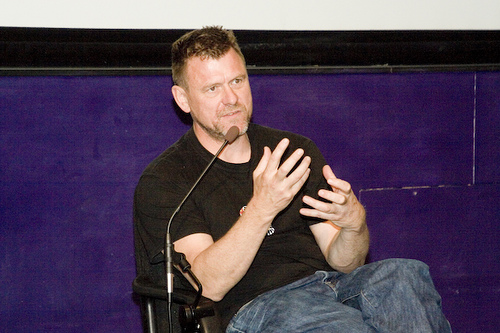
Andrew Kotting is known for his peculiar and wildly made short films. Over the years he has created experimental films such as Hoi Polloi (1990) and Smart Alek (1993) for which he has best received the audience's praise for. Kotting has even created a feature-length movie travelling the British coast with his mother and daughter, meeting new people and exploring new places. Though it has been said that he aims to explore more of the darker sides of his childhood memories. Elements of sentimentality and thought-provoking moments can also be said to be involved in his pieces. Revealing an underlining emotional intention.
A consistent theme has seen him collaborating with his daughter Eden, who suffers from an uncurable speech disorder. It is interesting to see that Kotting uses the imagery by his daughter to accommodate his pieces accordingly to the sounds being produced even saying in an interview a lot of what he does aims to facilitate the sounds going on in the background. Now, this is only an observation of his work and perhaps an interpretation of the two but I can see a correlation between his sounds and his daughter. Knowing Eden is unable to convey her meaning or intentions across orally. Is Kotting's work with sound a medium in which gives his daughter a platform to speak through? Using ambient sounds, natural or synthetic and recordings of speeches. Is this the vocabulary he has taught his daughter, shown in his pieces? after all in my opinion its a wonderful touch. I favour this notion because sounds can say a lot much like the saying 'One image can speak a thousand words.' It has a powerful definition of the world around us. As someone who has a family member who suffers from autism. I know the wonders sound could do and say on behalf of an individual.
What I like about his work most of all is his use of sound that in a sense brightens up the background with a translucent form of audio colour. It reminds me of my first soundscape pieces I originally did for my first year in uni, whereupon I based my piece on the painting 'Dulle Griet.' A rendition of hell being plundered by the mightily powerful hordes of women. In the piece itself, I had to consider carefully the interpretation of this image. Right down to the sounds of the elements and the noises echoing in the distance. It really did bring the image to life and can be a powerful addition to a screen project. This is a feature I share in common with Kotting as he himself once said;
"I like to sculpt with the sound in the same way I like to sculpt with the picture and the ideas, The story may change just to accommodate a sound."
BIBLIOGRAPHY
Andrew Kotting - Vimeo:
Andrew Kotting is known for his peculiar and wildly made short films. Over the years he has created experimental films such as Hoi Polloi (1990) and Smart Alek (1993) for which he has best received the audience's praise for. Kotting has even created a feature-length movie travelling the British coast with his mother and daughter, meeting new people and exploring new places. Though it has been said that he aims to explore more of the darker sides of his childhood memories. Elements of sentimentality and thought-provoking moments can also be said to be involved in his pieces. Revealing an underlining emotional intention.
A consistent theme has seen him collaborating with his daughter Eden, who suffers from an uncurable speech disorder. It is interesting to see that Kotting uses the imagery by his daughter to accommodate his pieces accordingly to the sounds being produced even saying in an interview a lot of what he does aims to facilitate the sounds going on in the background. Now, this is only an observation of his work and perhaps an interpretation of the two but I can see a correlation between his sounds and his daughter. Knowing Eden is unable to convey her meaning or intentions across orally. Is Kotting's work with sound a medium in which gives his daughter a platform to speak through? Using ambient sounds, natural or synthetic and recordings of speeches. Is this the vocabulary he has taught his daughter, shown in his pieces? after all in my opinion its a wonderful touch. I favour this notion because sounds can say a lot much like the saying 'One image can speak a thousand words.' It has a powerful definition of the world around us. As someone who has a family member who suffers from autism. I know the wonders sound could do and say on behalf of an individual.
What I like about his work most of all is his use of sound that in a sense brightens up the background with a translucent form of audio colour. It reminds me of my first soundscape pieces I originally did for my first year in uni, whereupon I based my piece on the painting 'Dulle Griet.' A rendition of hell being plundered by the mightily powerful hordes of women. In the piece itself, I had to consider carefully the interpretation of this image. Right down to the sounds of the elements and the noises echoing in the distance. It really did bring the image to life and can be a powerful addition to a screen project. This is a feature I share in common with Kotting as he himself once said;
"I like to sculpt with the sound in the same way I like to sculpt with the picture and the ideas, The story may change just to accommodate a sound."
When I really think about how the theme Maps & Networks can relate. I tend to think about two ends as it was, separated. By the distance between them. Trying to join, to create a fluent current running to its destination and back again. So when I bring Kotting's work into this I really interpret this as being a bridge between his daughter's impaired speech and the sounds he brings together to form a vocabulary. For her to connect with the world in a way that our networks have, that she's been denied. It shows that even sounds can have a story to tell just as much as a visual one could.
BIBLIOGRAPHY
Andrew Kotting - Vimeo:
https://vimeo.com/user7237586
Andrew Kotting website:
http://www.andrewkotting.com
Andrew Kotting image:
Andrew Kotting website:
http://www.andrewkotting.com
Andrew Kotting image:
Saturday, 4 March 2017
EXPERIMENTAL SOUND PROJECT
EXPERIMENTAL SOUND
DULLE GRIET -
A PAINTING BY
PIETER BRUEGEL THE ELDER
|
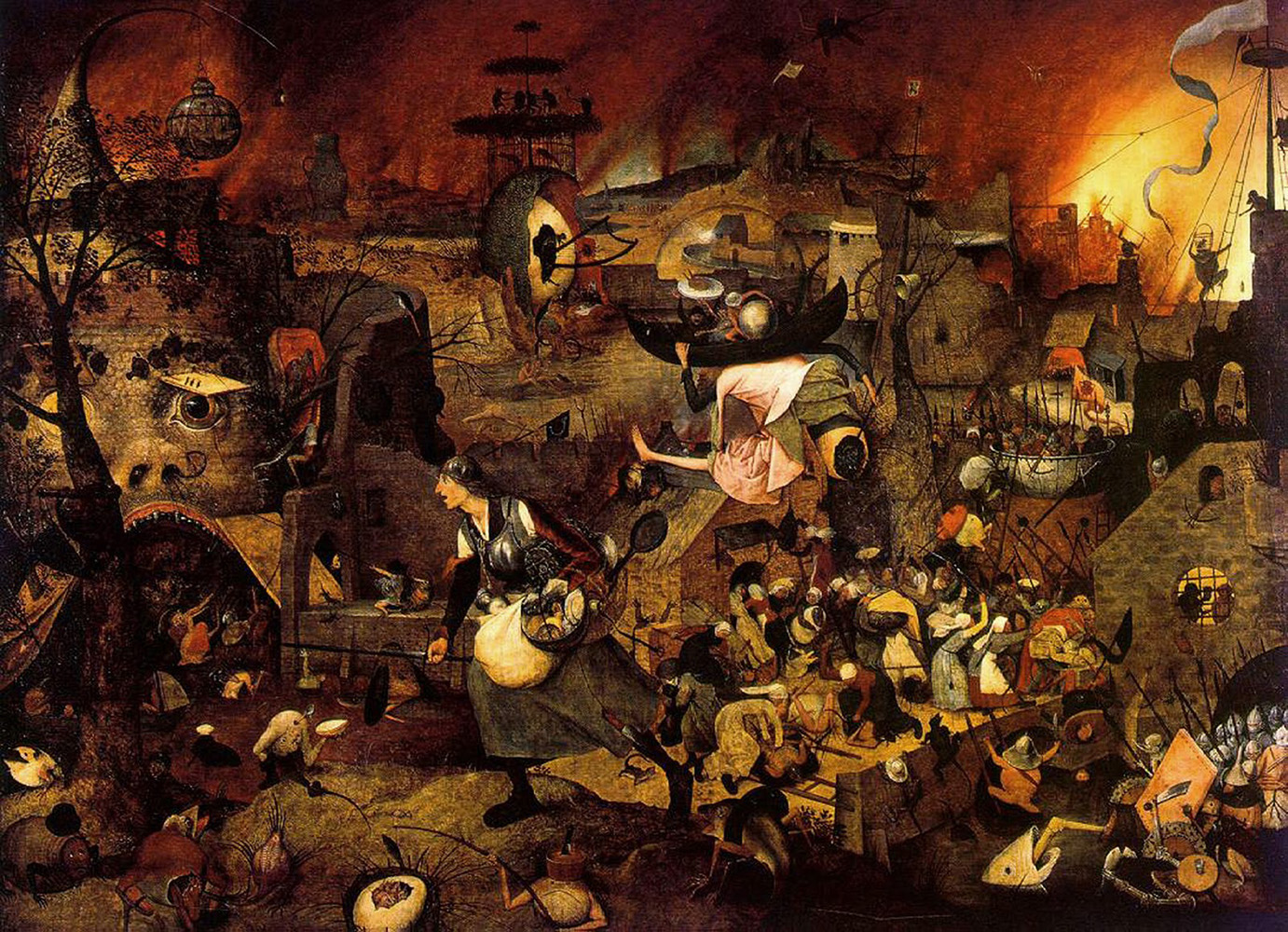
| Dulle Griet by Pieter Bruegel the Elder, 1562. |
The saying goes in a book of proverbs, published in 1568. One woman makes a clamour, two women a lot of trouble, three an annual market, four a quarrel, five and army, and six the Devil himself has no weapon.
Pieter Bruegel the Elder's work has been inspired by local culture and towns folk beliefs. This painting was created around c. 1568 during the time of the renaissance era. At this time famine and poverty was ripe throughout Europe. Isolation became common amongst townsfolk and such beliefs began to play upon minds of the locals.
Griet which is the name of this piece is a denigrated name given to bad tempered, shrewish woman. It speaks a lot of how Bruegel's depiction of hell was clearly inspired by Boschian like creatures from the painter Hieronymus Bosch. Hence, Bruegel's intentions about this piece became clear. This painting depicts the mockery of ill tempered woman and their outbursts charging through hell, plundering the realm of its possessions and emphasising the fact that bad tempered women can run to hell and back, unscathed and unhindered due to their robust nature. What I found interesting was that the first time I saw this painting I believed to be another depiction of hell and the chaotic damned souls being punished by unnatural creatures. However upon learning more about it I became aware that this is a stampede of women plundering the caverns and sacking hell for all its treasures. This Painting can also relates to the saying "Hell hath no fury like a woman scorned." This piece creates and alternative meaning to the idea of Hell being the worst place on earth and into, a victim of greed and covertness.
For my Experimental sound project I'm going to try and create and eerie tune with various sounds of strong winds and raging fires down to loud screams and roars of onward plunderers moving deeper into hell, perhaps even creating sounds to accommodate the Boschian creatures, which hopefully will intensify the overall feel to this piece. My recording will begin over this week and I will be recording how I achieved my sounds.
The result was unexpected, yet however I am very pleased with the end result. My idea was to create a soundscape that had an western styled heart beating sound yet my end result came out a lot different and more to the style of dark ambient background. With this in mind here is my final version of my experimental sound project.
The result was unexpected, yet however I am very pleased with the end result. My idea was to create a soundscape that had an western styled heart beating sound yet my end result came out a lot different and more to the style of dark ambient background. With this in mind here is my final version of my experimental sound project.
EXPERIMENTAL SOUND PROJECT
BIBLIOGRAPHY
Dulle Griet Painting image :
Monday, 6 February 2017
AVALANCHE SOUND EXERCISE
SOUND WORKSHOP III
As part of our continuation of our sound workshops we were tasked to create a multi mix track of sounds that resembled the noises of an avalanche, provided as an image for us. I used a collection of wind, footsteps and loud cracking sounds to create my piece and within Adobe Audition I was able to lower the pitch and create effects, which helped immensely to getting the sounds right to the image of the avalanche.
As part of our continuation of our sound workshops we were tasked to create a multi mix track of sounds that resembled the noises of an avalanche, provided as an image for us. I used a collection of wind, footsteps and loud cracking sounds to create my piece and within Adobe Audition I was able to lower the pitch and create effects, which helped immensely to getting the sounds right to the image of the avalanche.
Sound Exercise
MATERIALISM
This week we were tasked to create another short video as part of our weekly assignment. The theme for this was materialism.
Drawing inspiration from one or more of the video artists we have explored, create a short one to two minute work (or work in progress) referencing the materiality of the digital (as opposed to analogue film).
This could be the internet, social media, apps, gaming or digital technology of any kind You might want to explore how images can be manipulated through using premier pro software for example. Think about making something that might play as a loop ie playing over and over again.
MATERIALISM
The inspiration for my short film was the idea that society revolves around currency to survive. But that we survive only to continue earning currency. How we do this in this era is through technological means such as online banking, ATM's, Paypal etc.. this is emphasised by the computerised voice over.
Wednesday, 1 February 2017
SOUND WORKSHOP II
SOUND SYNCING WITH MOVING IMAGE

Today's workshop was to teach us about being able to use Adobe audition to synchronise sounds to accompany films and the various sounds and sound effects we could use in order to achieve an effective and accurate result.


Sound editing was done in Adobe Audition, which was then exported into Adobe Premiere to synchronise against the animation below. Overall I found this project fun and would definitely like to explore the production, editing and synchronisation of sound in my future films.

Finished Film

Today's workshop was to teach us about being able to use Adobe audition to synchronise sounds to accompany films and the various sounds and sound effects we could use in order to achieve an effective and accurate result.

Adobe Audition Interface
Sound editing was done in Adobe Audition, which was then exported into Adobe Premiere to synchronise against the animation below. Overall I found this project fun and would definitely like to explore the production, editing and synchronisation of sound in my future films.

Adobe Premiere Interface
Finished Film
BIBLIOGRAPHY
Adobe Audition logo:

Adobe premier logo:

SOUND WORKSHOP I
This was the first workshop of the new term that we explored the use of sound. During this we were taught the various techniques that could be used to produce a good sound for our visual pieces and the equipment used. We had access to a variety of different microphones and were taught a few different set ups. Specifically, we were taught about polar patterns and shown how to set the Mic up to record for live music.

In our workshop we primarily had Ben play the guitar and Donna record vocals but also explored other sounds using different vocalists and guitars.


Polar Patterns Explored
Each contemporary microphone used in sound today has a specific Polar Pattern. The basis of a Polar Pattern is in which direction a microphone picks up sound. It is the sensitivity of a microphones ability to pick up sounds coming from different angles towards its centre.
Cardioid Polar Pattern
A commonly used directional polar pattern, an example of this used in practice would be in the microphone held by a Vocalist when performing on stage. It is often used to pick up only one sound source and is not as sensitive to sounds around this main source, at its sides or rear.
Super-cardioid/Hyper-cardioid Polar Pattern
This is a variation on the classic Cardioid shape but have a tighter and more narrow directionality at the front. Most commonly used in Shot Gun Mics or on Cameras. This Polar Pattern will pickup some sound from its rear. This is good for isolating sound and focusing on one source.
Omni-directional Polar Pattern
Microphones with this Polar Pattern pickup sound sources from every directions which makes them useful for moving subjects, ambience or sound that is not easily controlled. Most often used in Lavalier Mic's. These microphones are flexible but are the nosiest.
Figure of Eight (Bidirectional)
These Microphones pick up sound sources from the front and the rear but block out sound from the sides. They are most often used in interviews where the Mic needs to pick up two audio sources.
BIBLIOGRAPHY
Source: http://www.rode.com/blog/all/what-are-a-microphones-polar-patterns

In our workshop we primarily had Ben play the guitar and Donna record vocals but also explored other sounds using different vocalists and guitars.


Polar Patterns Explored
Each contemporary microphone used in sound today has a specific Polar Pattern. The basis of a Polar Pattern is in which direction a microphone picks up sound. It is the sensitivity of a microphones ability to pick up sounds coming from different angles towards its centre.
Cardioid Polar Pattern
A commonly used directional polar pattern, an example of this used in practice would be in the microphone held by a Vocalist when performing on stage. It is often used to pick up only one sound source and is not as sensitive to sounds around this main source, at its sides or rear.
Super-cardioid/Hyper-cardioid Polar Pattern
This is a variation on the classic Cardioid shape but have a tighter and more narrow directionality at the front. Most commonly used in Shot Gun Mics or on Cameras. This Polar Pattern will pickup some sound from its rear. This is good for isolating sound and focusing on one source.
Omni-directional Polar Pattern
Microphones with this Polar Pattern pickup sound sources from every directions which makes them useful for moving subjects, ambience or sound that is not easily controlled. Most often used in Lavalier Mic's. These microphones are flexible but are the nosiest.
Figure of Eight (Bidirectional)
These Microphones pick up sound sources from the front and the rear but block out sound from the sides. They are most often used in interviews where the Mic needs to pick up two audio sources.
BIBLIOGRAPHY
Source: http://www.rode.com/blog/all/what-are-a-microphones-polar-patterns
Subscribe to:
Posts (Atom)